
Short answer
Dishes are hard with ADHD because they never finish: the sink refills after every meal, the job is unpleasant to touch, and a small pile quietly becomes a big one that blocks the whole kitchen. The fix is smaller starts: empty the rack first, wash one category, and stop when a timer ends.
On this page
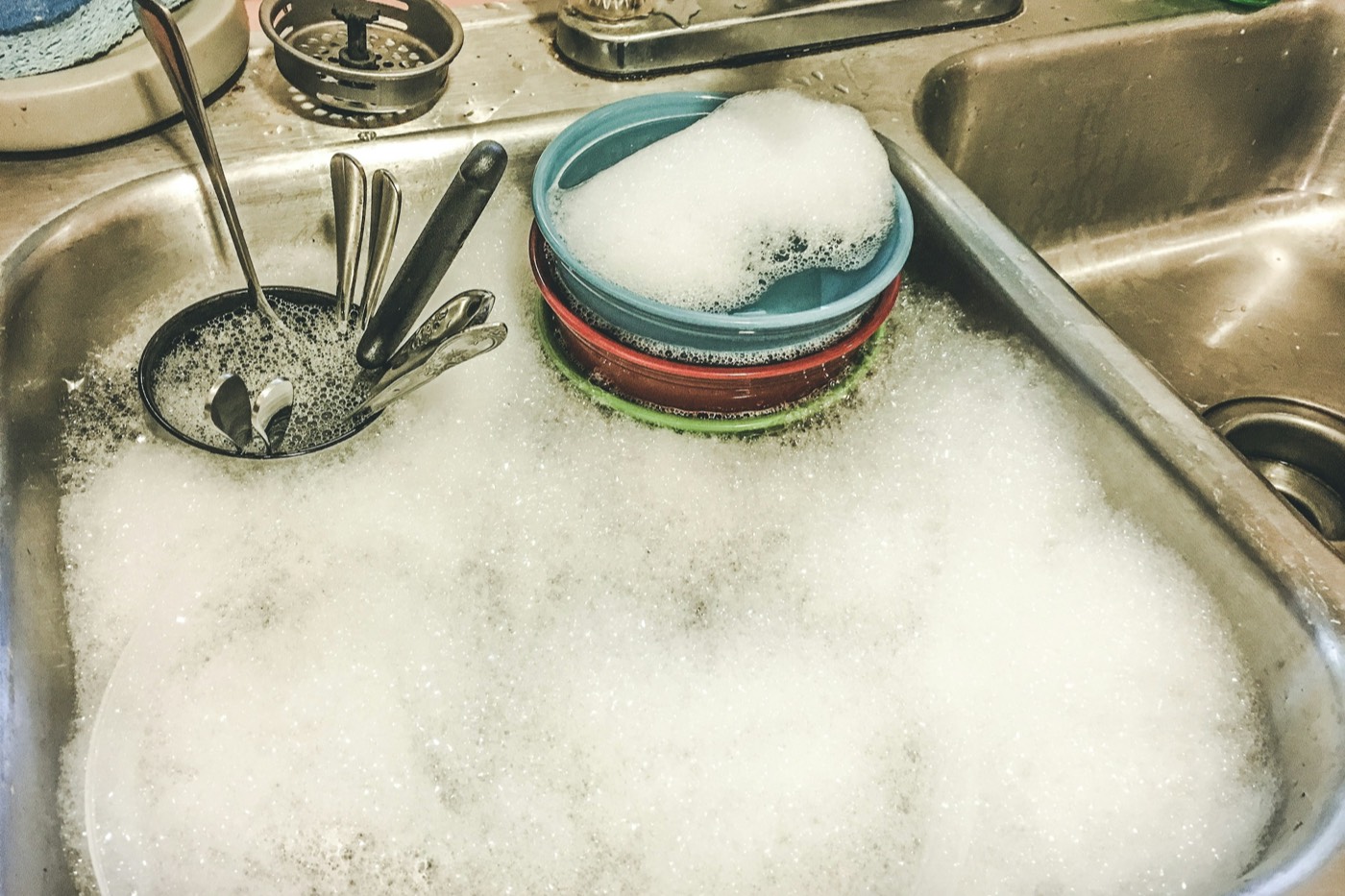
You can deep clean a bathroom when the mood takes you. You once reorganised an entire cupboard at midnight. But there are four mugs, a pan and a stack of plates in the sink, and you have walked past them for three days. It is the smallest job in the house, and somehow the one you cannot touch.
Why are dishes so hard with ADHD?
Dishes are hard with ADHD because they combine the three things ADHD finds most difficult: a job with no ending, a job that is unpleasant to do, and a job whose reward disappears almost at once.
Most chores finish. You clean a bathroom and it stays clean for a few days. The sink refills at the next meal. Whatever you do tonight, there will be a mug in it by tomorrow morning, so the feeling of having finished barely arrives before it is gone. A brain that runs on a sense of progress gets almost none from washing up.
Then there is the job itself. Cold food, soggy bits in the plug hole, greasy water, the smell of a pan left too long. For many people with ADHD, sensory discomfort is a real barrier rather than a minor annoyance, and washing up is full of it. Wiping a counter is mildly boring. Putting your hand into a sink of old water is something you have to talk yourself into.
And starting is already the expensive part. If not being able to start cleaning at all is familiar, the sink is where that shows up most often, because it asks you to start several times a day, every day.
Why does a small pile turn into a big one?
Because the cost of the dishes does not grow evenly. Three plates washed straight after dinner take two minutes. The same three plates tomorrow have dried food on them. By the third day they are under a pan, which is under a bowl, and you cannot fill the sink without taking everything out first.
That is the trap. Each day you leave it, the next start gets harder, so you are more likely to leave it again. It is the same shape as the rewash loop that makes laundry defeat people with ADHD: a job that is easy on time becomes a project once it slips.
A full sink also blocks everything around it. There is nowhere to fill the kettle, nowhere to rinse vegetables, no clean pan to cook in. So you order food or eat something that needs no cooking, and the kitchen stops being a place you use. The dishes are small, but what they block is not.
How do you get the dishes done with ADHD?
You get them done by making each start smaller, not by trying to feel more motivated. Here is where the steps can be cut.
1. Empty the rack or dishwasher first
Often the real reason the sink is full is that there is nowhere for clean dishes to go. The dish rack is full of dry things nobody put away, or the dishwasher is full of clean ones. That hidden first step is what stalls the whole job. Make it the task on its own: put away what is dry. Once there is space, the washing has somewhere to land.
2. Wash one category, not the pile
"Do the dishes" has no edges. "Wash all the cutlery" does. Pick one kind of thing, glasses or cutlery or mugs, and wash only that. It is a job with a clear ending, and it usually makes enough room in the sink that the next category feels possible. If it does not, you still did something, and that counts.
3. Tie it to something that already happens
Rinse your mug while the kettle boils. Wash the pan while the pasta finishes. Put your plate straight in the dishwasher instead of on the counter "for now". These are tiny, and they work because they ride on an action you were doing anyway, so there is no separate start. Loading what is in the sink also makes a good item for closing duties, the short fixed list you run each evening.
4. Make it less unpleasant
If the texture of old food is what stops you, deal with that directly. Rubber gloves take the worst of it away. A long-handled brush means your hands never go into the water. Hot water and a squirt of washing-up liquid run before you start make the sink look less grim. Put on a podcast or a song you like. None of this is cheating. You are removing the thing that makes you walk past.
5. Use fewer dishes
Every item you own is one more thing that can end up in the sink. One mug per person, a small set of plates and bowls within reach, and the rest put away in a high cupboard means the pile can only get so big. It also means you run out sooner, which sounds like a problem but works as a reminder.
What if the sink is already full?
If the sink is already full, treat it as a digging-out job with a limit, not a mess you have to clear tonight.
- Clear the rack or dishwasher, so clean things have somewhere to go.
- Scrape all the food into the bin before anything touches water.
- Sort the pile on the counter by type: cutlery, glasses, plates and bowls, pans.
- Fill the sink with hot soapy water and put the pans in to soak.
- While they soak, wash the glasses and cutlery, which are quick and make the most visible difference.
- Set a ten-minute timer and stop when it ends.
Stopping is the important part. A sink that is half cleared and a person who is willing to come back tomorrow is a better result than a sink cleared at midnight and a person who avoids the kitchen for a week. The next day, do another ten minutes, and fold the dishes into a routine with a daily floor once the backlog is gone.
Is it okay to use paper plates?
Yes. Washing up is a way of having clean things to eat from. It is not a measure of whether you are a good or a responsible person. KC Davis, a counsellor who writes about housework for people who are struggling, puts it as care tasks being morally neutral: they exist to serve you, not the other way round.
So on a bad week, paper plates or a set of plates you only use when the sink is full are a sensible tool, not a failure. They stop the pile from growing while you have less to give. When the week gets better, you go back to normal plates. Nothing was lost.
How ADHD Cleaning Planner fits
ADHD Cleaning Planner breaks the kitchen into small tasks, so "empty the rack" and "wash the glasses" can each be their own tick rather than one vague job. The ten-minute timer keeps a session short enough to start, which suits a sink that needs clearing in stages.
This article describes coping strategies, not medical advice. If ADHD is affecting your daily life, a clinician is the right person to talk to.
Frequently asked questions
Why can I clean a whole room but not do the dishes?
Because a room has an ending and the dishes do not. When you clean a room, you see it finished. The sink refills after the next meal, so the reward barely lasts, and the job is also physically unpleasant in a way that wiping a surface is not.
Should I leave dishes to soak?
Soaking helps pans with dried or burnt food, and it is worth doing while you wash other things. It stops helping when it becomes the reason the washing never starts. If a pan has been soaking since yesterday, the water has done its job and the pan is next.
Is it okay to use paper plates when I am struggling?
Yes. Washing up is a way of having clean plates, not a test of character. On a bad week, fewer dishes to wash is a sensible choice, and it keeps the sink from growing while you have less to give. You can go back to normal plates when you have more capacity.
What is the fastest way to clear a sink full of dishes?
Empty the dish rack or dishwasher first, scrape everything into the bin, then sort the pile by type on the counter. Put the pans in hot soapy water to soak, wash the glasses and cutlery while they soak, and stop when a ten-minute timer ends.