Short answer
You often cannot start cleaning because the mess has not been broken into steps. ADHD can make that first step hard to picture, so the whole room looks like one enormous task, and starting stalls. More willpower is rarely the answer. Making the first action so small and so specific that starting needs almost no decision often helps.
On this page
You are standing in the doorway of a room you genuinely want to clean. You have the time. You are not doing anything else. And you cannot move. If that is familiar, this article is about what is actually happening and what to do about it.
What is ADHD task paralysis?
Task paralysis is the state of being unable to begin a task you want to do. It is often linked to executive function: the mental skills that break a goal into steps, put those steps in order, and start the first one. CHADD, the national ADHD resource centre in the United States, describes executive function as the brain functions that activate, organise and manage other functions, says impairments in it affect the ability to begin, work on and complete tasks, and calls it commonly thought to be closely related to ADHD symptoms.
Cleaning is unusually demanding on exactly those operations. "Clean the bedroom" is not one task. It is forty small tasks in no particular order, most of which you have to invent yourself. If sequencing tasks is hard for you, you may not see forty steps. You may see one shapeless job, marked urgent, with no visible entry point.
So you stall. Not out of laziness, but because "what do I do first?" has no easy answer.
For me it starts with the rooms. Living room, kitchen or bedroom? I can think of a good reason to do each one first, so I go round in circles in my head. Then I get stuck, I do nothing, and I end up scrolling on my phone.
Why does the mess make it worse?
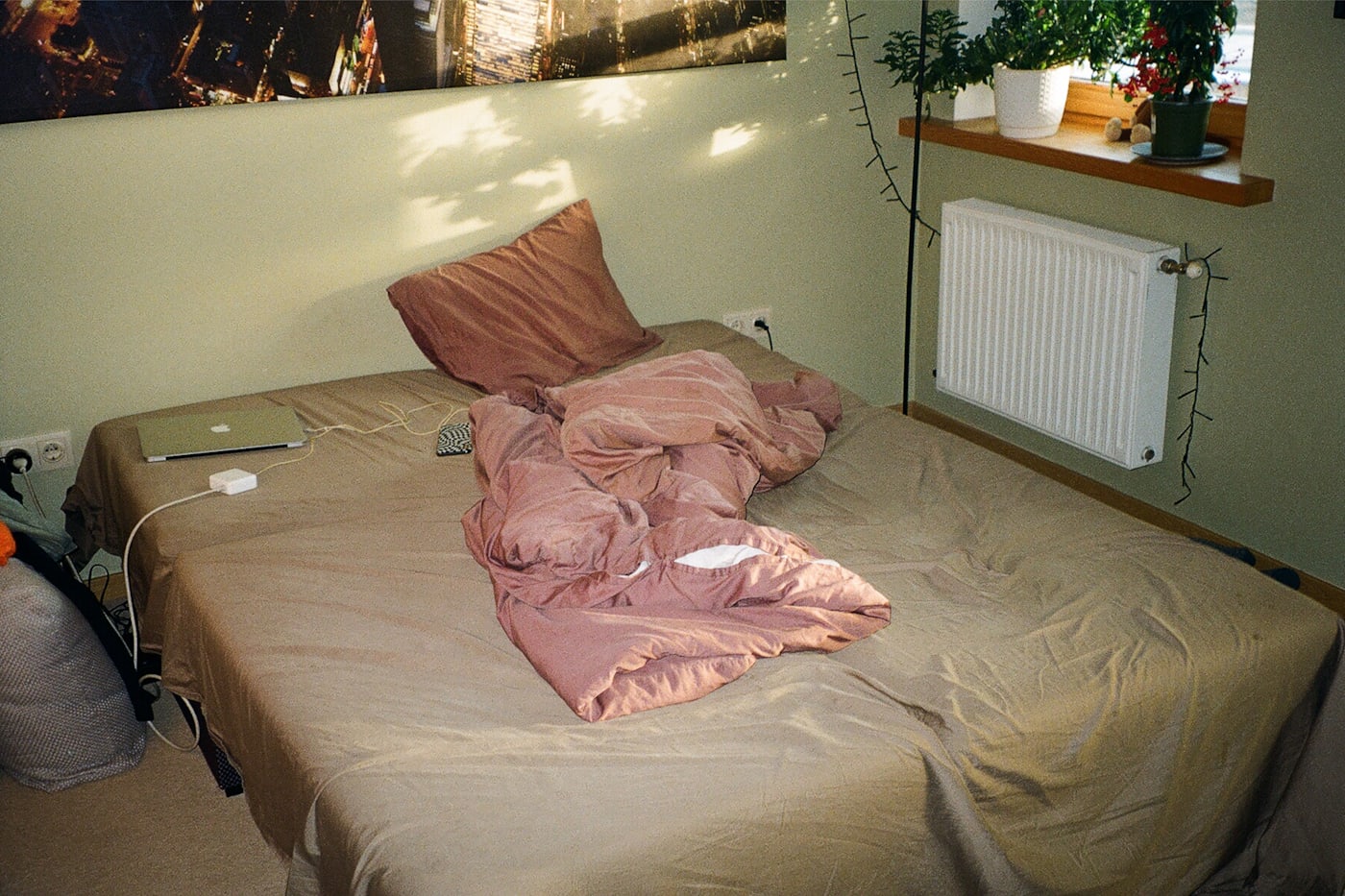
Every visible object in a messy room can feel like a small unfinished decision. The mug is a decision. The pile of laundry is a decision. Together they take up the attention you need to plan with. When those undecided things collect in one spot, you get a doom pile.
This creates a loop many people with ADHD will recognise: the messier the room, the harder it is to plan how to clean it, and the longer it stays messy. The mess is both the problem and the reason the problem persists.
That is exactly how it goes in our house. The mess piles up and gets worse, until the whole house is a mess and there is no starting on it anymore. With four children it never stops: they make a mess all day, and you are never done. What helps in a house like that is its own subject: cleaning with ADHD when there are children at home.
It is also why "just start somewhere" so rarely works as advice. Somewhere is still a decision. I know that one: when someone tells me to just start, I feel they have not understood.
The same goes for waiting to feel ready: why waiting for motivation to clean does not work explains why the feeling usually comes after the first step.
What actually helps you start?
Five things, in rough order of how reliably they work:
1. Shrink the task until it is stupidly small
Not "clean the kitchen". Not even "do the dishes". Put three things in the dishwasher. The task has to be small enough that your brain does not need to plan it. Small enough that refusing it would feel silly.
Once you are moving, continuing is far easier than starting was. The small task is not the goal; it is the ignition.
What works for me is a list I can tick off, on paper or now in the app. Without one, a messy room looks like one big mountain I cannot get over, and I do not know where to begin. With one, it is a row of small things.
2. Set a ten-minute timer
A timer changes the question from "can I clean this whole room?" to "can I do ten minutes?" The second question has an obvious answer. It also gives you a guaranteed exit, which removes the fear of being swallowed by an open-ended job.
Finish at ten minutes if you want to. That counts. Most people do not stop, but the permission is what made starting possible.
The length matters less than the end. I often set fifteen minutes for the kitchen, and when it goes off, I stop.
3. Work room by room, in a fixed order
Decide the order once, on a good day, and never decide it again. A fixed route means that on a bad day there is nothing to plan. You just follow the list you already made. There is more on setting up that order in a cleaning routine that survives a bad week. If you would rather not write the list yourself, the free ADHD cleaning checklist makes one for any room, starting with a five-minute quick win.
4. Use a body double
Clean while someone else is present, on a video call, or on a livestream. They do not need to help. Another person in the room can give you some of the structure that is hard to produce on your own. If nobody is around, there are ways of body doubling on your own.
5. Record it
Start a timelapse before you start cleaning. The camera works as a body double while you go, and afterwards you have a video of the room changing, which is harder to argue with than the feeling that you barely did anything.
This is the trick that helps me most. I got the idea from timelapse cleaning videos on YouTube and started using a separate timelapse app. Those apps did not work brilliantly: some cost money, and my phone's storage filled up fast. But the idea held. Filming keeps me going, it stops me drifting off to something else, and it is fun to watch back afterwards. Once I am going, it is much easier to keep at it.
What to do on a day when nothing works
Some days none of the above will start you, and that happens to many people with ADHD. On those days I do only what is needed and ask the family to help. If you can, aim at one surface. One counter, one side of the bed, one chair. A single cleared surface is a real change to the room, and it is often enough to make tomorrow's start easier. If evenings are when you have least left, a short fixed list called closing duties works on the same idea.
What does not help: deciding you have failed, and adding today's mess to the evidence file. The room does not get cleaner and the next start gets harder.
A last honest limit: this article cannot tell you why you are stuck. If you can almost never start, even on things you care about, or you feel low most days, that is worth taking to a doctor. The NHS says that if ADHD symptoms are affecting your studies, work or relationships, a GP appointment is the first step, and that depression and anxiety can make ADHD symptoms worse. I live with ADHD, but I am not a clinician, and none of this is medical advice.
How the app fits
ADHD Cleaning Planner was built around these five methods rather than around a chore list. Rooms come pre-broken into small tasks, so the sequencing is already done. The ten-minute timer is one tap. The timelapse records while you work. And the finished video is there afterwards, for the moments when you are sure you did nothing.
Frequently asked questions
Is task paralysis the same as procrastination?
Not quite. Procrastination is choosing something more pleasant instead. Task paralysis is wanting to start, knowing it matters, and still being unable to move. The distinction matters, because advice aimed at procrastination (discipline, consequences, guilt) tends not to help when the problem is starting.
How long should an ADHD cleaning session be?
Ten minutes is a good place to begin. It is short enough that starting feels survivable and long enough to change how a room looks. You may keep going past the timer, but finishing at ten minutes still counts. Maya sometimes uses five or fifteen minutes instead.
Why does cleaning feel easier when someone else is in the room?
That is called body doubling. Another person's presence can give you some of the outside structure that is hard to produce on your own. They do not have to help or even talk. For some people a video call, or just a recording running, is enough.
Does a timelapse video actually help?
It helps Maya, who has ADHD, and it may help you. The running camera keeps her going while she works, and the finished video shows what she actually did, which is easier to trust than the feeling that she did not do enough. It is not proven to work for everyone.