Short answer
Tidying is maintenance: a short, repeatable reset that keeps a house usable. Digging out is catch-up: clearing a backlog that built up over weeks. With ADHD the two often get mixed, so a quick tidy turns into an impossible project. Keep maintenance small and daily, and give catch-up its own short, separate slot.
On this page
You meant to clear the kitchen counter before bed. Ten minutes, tops. Under the mugs was a stack of post, under the post was a bag from last week, and at midnight you were sorting paperwork on the floor with the counter still half full. I have ADHD, and keeping a busy house tidy has never come easily to me, so I know how it goes. The problem was not effort. You were doing two different jobs at once, and only one of them fits in ten minutes.
What is the difference between maintenance and catch-up?
Maintenance keeps a house usable from one day to the next; catch-up deals with what built up while maintenance was not happening. They sound like the same activity, because both involve picking things up and putting them somewhere. They are not.
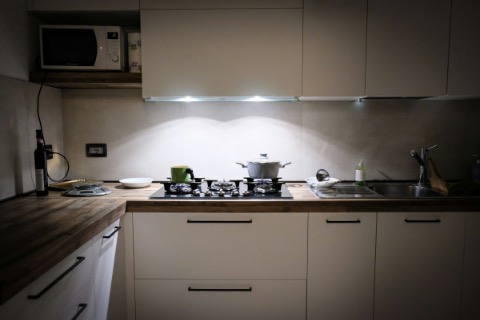
- Maintenance is tidying: today's cups to the sink, today's clothes to the basket, the counter wiped. It is small, it repeats every day, and it never finishes, because tomorrow there will be new cups.
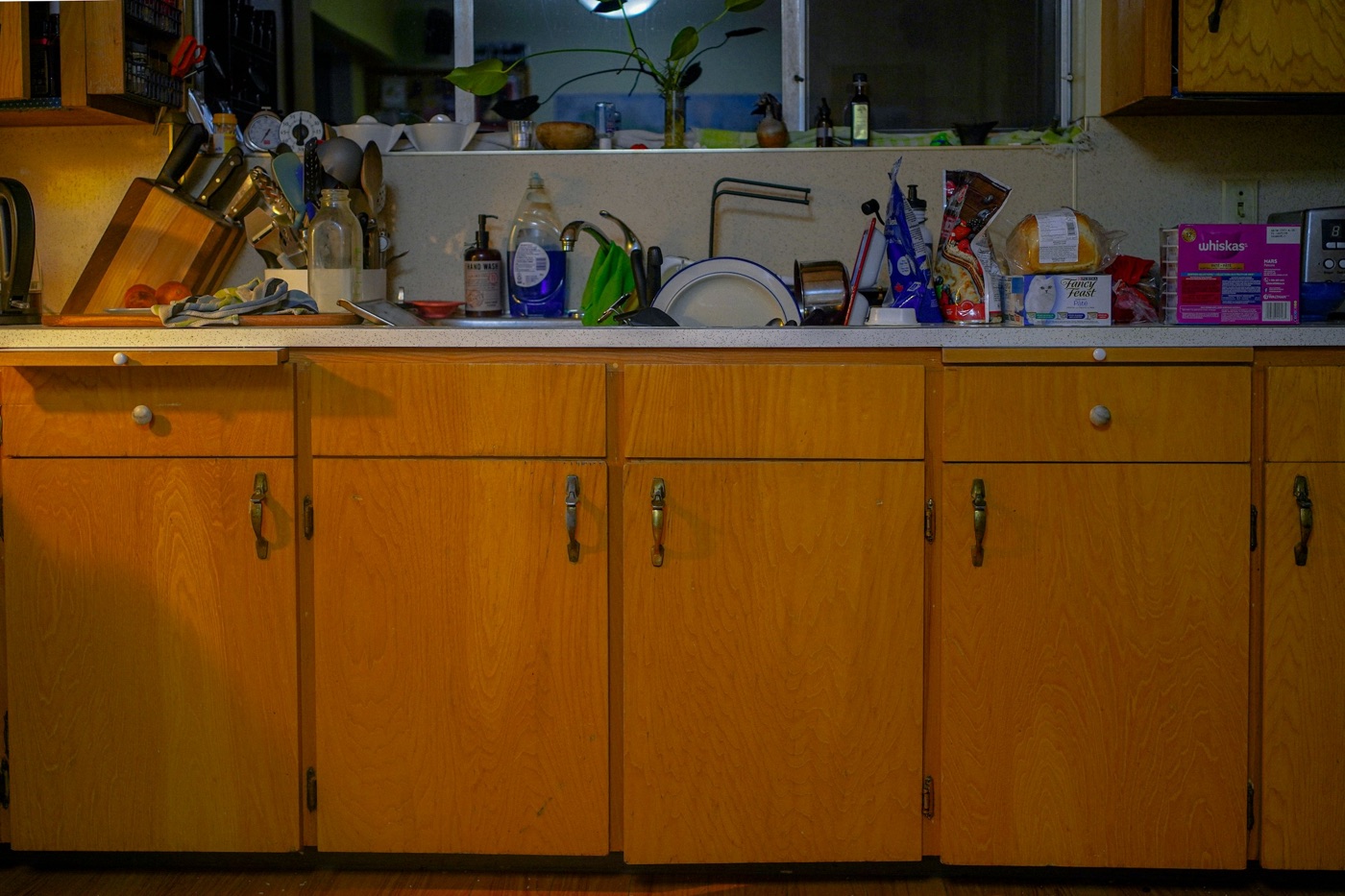
- Catch-up is digging out: the chair of clothes, the pile of post, the cupboard nobody has opened since spring. It is big, it is a one-off, and it does finish, because the backlog is a fixed amount.
They also need different things from you. Maintenance needs almost no decisions: everything already has a place, you just return it. Catch-up is mostly decisions: what this is, whether to keep it, where it goes now. That is why one feels like nothing and the other feels like a mountain.
Why does mixing them go wrong with ADHD?
Because a maintenance job with no clear edge turns into a catch-up job without asking you first. The NHS lists finding it hard to organise your time, and finding it hard to finish tasks, among the signs of ADHD in adults. A tidy that quietly grows into a dig-out is a hard task to organise and an even harder one to finish.
It goes wrong in the other direction too. When several rooms are a mess, I get overwhelmed and do not know where to start. Every room has a reason to go first, so I go round in a circle. If that sounds familiar, it is because the whole backlog is in view: every pile is asking to be next, and the small daily things you could have done get lost among them.
And there is the all-or-nothing trap. I have the idea that it is never good unless everything is spotless, and it never is. You may know the same thought. With it, putting today's cups away feels pointless while the cupboard behind them is still full. So the maintenance stops, the backlog grows, and the next dig-out is bigger.
Which should you do first?
Maintenance first, even while the backlog is still there. Maintenance is what stops the backlog from growing. If you only dig out and never maintain, new mess arrives as fast as you clear the old, and the dig-out never ends.
So the daily reset runs from today, at the current state of the house, not at some clean state you have to reach first. It only covers the things that came out today. The backlog can sit next to it, untouched for now, and that is fine. Waiting until you have caught up before you start a routine is how a routine never begins; there is more on that in starting again after months of not coping.
How do you keep a house clean with ADHD day to day?
With maintenance: a short, fixed list that resets the things you used today, done at the same point in the day. For many people that is the evening, which is the idea behind closing duties: a handful of tasks so tomorrow starts in a usable kitchen. For example:
- Cups and plates from today into the sink or dishwasher.
- Today's clothes into the laundry basket.
- The kitchen counter cleared of food and wiped.
- Bags and keys back in their spot.
Notice what is not on it: the post from last month, the cupboard, the chair. Those are catch-up. A short round before bed helps me enormously, and I wake up better for it, even when I am tired and it is late, if I can bring myself to do it.
How do you dig out without losing a whole day?
Give catch-up its own slot, separate from maintenance, with a timer and one small area. Not "the kitchen". One shelf, one chair, one corner of the counter.
When a room looks like too big a pile to begin, I get stuck and end up scrolling on my phone instead. What helps me is breaking a space like the kitchen into very small steps and doing them one at a time, so it stops being one unmanageable pile. I set a timer for 5, 10 or 15 minutes, do as much as I can, and then pause, or carry on if I feel like it. It does not always work, but it helps me begin very often.
Two rules keep the slot from swallowing the day:
- Stop at the edge of the area. If the shelf is done and the next shelf is calling, that is a decision for the next slot, not a reason to keep going until you run out.
- Catch-up does not replace maintenance. A two-hour dig-out on Saturday does not mean Saturday's cups can stay out. The daily reset still happens, even if it is the only thing that happens.
The guess about how long it will take is often wrong as well. I sometimes think the kitchen will take hours, and when I keep going with these tricks it goes faster than I expected. If the backlog is mostly a heap of unrelated things on one surface, clearing a doom pile has a sorting method of its own.
How do you know which job you are doing?
Ask one question before you start: did this come out today? If yes, it is maintenance, and it goes back to its place now. If no, it is catch-up, and it waits for the catch-up slot, however much it bothers you.
That rule feels strange the first few times, walking past a pile on purpose. But it is what keeps the ten-minute tidy at ten minutes. The pile is not being ignored. It has an appointment.
One honest limit. Not every backlog is a cleaning problem. If the house has been sliding for months because you feel low or exhausted most days, a doctor is a better first step than a timer. And if letting go of things is the hard part, so that the amount kept is starting to affect your health or the people you live with, the NHS advises you to see a GP about hoarding disorder. This article is a way of organising the work, not a treatment for any of that.
Where does the app fit?
We make ADHD Cleaning Planner, and it is built around keeping jobs small. It breaks each room into small steps, so a session has an ending instead of spreading into the next pile, and its ten-minute timer is sized for exactly the kind of slot described above. For the days when even the first step will not come, there is a "Help, I can't start" countdown.
Frequently asked questions
Why can't I keep my house clean with ADHD?
Often because the daily maintenance stops while the backlog is in view. Putting today's cups away feels pointless next to a full cupboard, so nothing gets put away and the backlog grows. Keeping a small daily reset going from today, whatever state the house is in, is what stops the slide.
Should I catch up on cleaning before starting a routine?
No. Start the daily maintenance first, while the backlog is still there, and give the backlog its own short slot alongside it. If you wait until everything is caught up before starting a routine, the routine may never begin, and new mess keeps arriving while you dig.
How long should a catch-up session be?
Short and with a fixed end, for example a timer of 10 or 15 minutes on one small area. You can carry on when the timer ends if you want to, but the session counts as done either way. A short slot you actually start is worth more than a long one you keep putting off.
Why does a quick tidy turn into hours of cleaning?
Because the tidy runs into the backlog. You go to clear the counter, find the post underneath, start sorting the post, and the ten-minute job has become a catch-up session with no end. Deciding in advance which job you are doing, and stopping at its edge, keeps a tidy a tidy.