
Short answer
A doom pile is a heap of unrelated things left in one spot because each item needs a small decision that never got made. You clear it by sorting before deciding: split the pile into rubbish, things that belong in another room, things that need an action, and things that stay. Then handle each group in a single pass.
On this page
There is a chair in your bedroom that has not been sat on in months. Or a corner of the kitchen counter, or the bottom step of the stairs. On it is a pile: post, a jumper, two cables, a receipt you might need, a book you meant to return. You walk past it every day. You know it is there. And every time you think about clearing it, something in you quietly declines.
That is a doom pile, and there is a way through it that does not depend on finding the willpower first.
What is a doom pile?
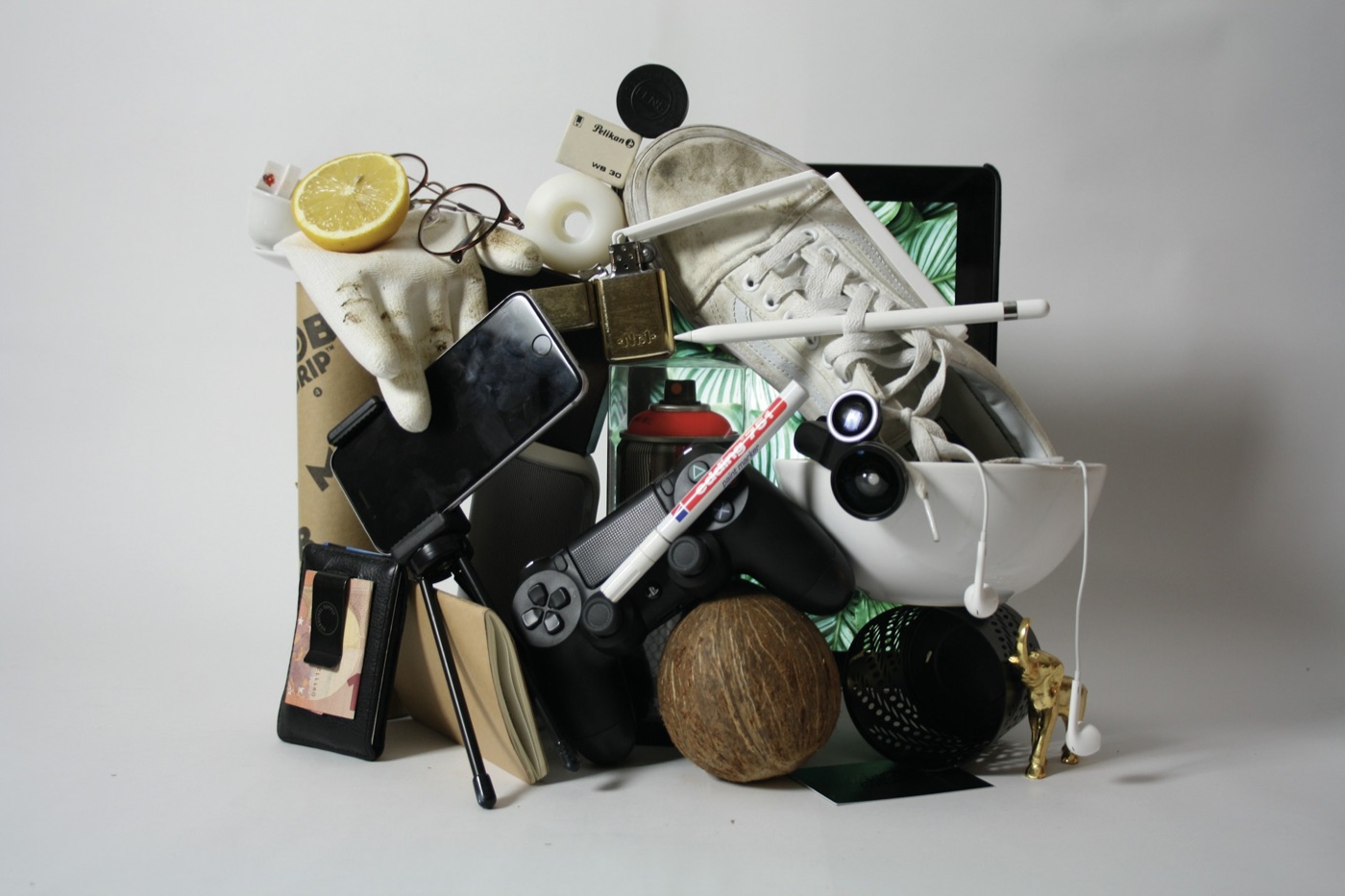
A doom pile is a heap of unrelated things left in one place because each of them needs a small decision that did not get made. The name is often expanded as "Didn't Organise, Only Moved", which is accurate. The things in it were not forgotten. They were picked up, meant to be dealt with, and put down somewhere slightly more out of the way.
The key word is unrelated. A stack of clean laundry is not a doom pile, because it is one job. A doom pile mixes a bill, a sock, a birthday card and a screwdriver, and each one wants something different from you.
Why do doom piles form with ADHD?
They form because putting something away is a chain of small decisions, and ADHD makes that chain easy to break. Take a letter. To put it away you have to open it, decide whether it matters, decide where it lives, and then walk there. If any link in that chain is unclear, the letter goes down on the nearest flat surface.
Once there is one thing on a surface, the second is easier to add. The surface has become the place where undecided things go. Within a week it is a pile, and within a month it is part of the furniture.
None of this is laziness. It is what happens when a brain that struggles with working memory and task switching meets a house full of objects that each need a destination. The same gap is behind not being able to start cleaning at all.
Research points the same way. In a UK study of adults with ADHD, inattention was the only ADHD trait that predicted how much clutter and hoarding people had; hyperactivity did not. The numbers are in these ADHD and clutter statistics.
Why is a doom pile so hard to clear?
It is hard because you are not looking at one job. You are looking at forty small, different jobs stacked on top of each other, and your brain tries to price all of them at once.
When you pick up the first item, say a parcel slip, it asks for a decision and an action: find the parcel, maybe go to the post office. The second item, a broken earring, asks for a completely different one. Every item switches the task, and task switching is exactly the thing that drains an ADHD brain fastest. Ten items in, you are tired, the pile looks the same, and you put it all back.
This is also why the idea of throwing the whole pile in a bin is so tempting, and why it rarely works. Doom piles almost always hide a few things that matter, like a letter with a deadline, a charger or a spare key. Binning the lot swaps the stress of the pile for the stress of wondering what went with it.
The fix is to stop deciding and doing at the same time.
How do you actually clear one?
You sort first and act later. Sorting only asks one question per item, which is far lighter than asking four.
1. Move the pile to where you can sit
Carry the whole thing, or a large armful, to a table or the floor where you can sit down. Clearing a pile while standing over it feels temporary, and temporary is easy to abandon.
2. Set out four spots
Use bags, boxes, or just four patches of floor. Label them in your head or on paper:
Rubbish. Wrappers, old receipts, flyers, anything dead.
Goes elsewhere. Anything that lives in another room.
Needs an action. Anything that asks you to do something: pay, reply, return, fix.
Stays here. The few things that genuinely belong in this spot.
3. Sort without doing anything else
Pick up each item and put it in one of the four spots. That is the whole task. Do not open the envelope. Do not take the mug to the kitchen. Do not start fixing the earring. If you are unsure, it goes in needs an action.
This part moves quickly because every item gets the same question. Most people are surprised how fast a pile disappears once it no longer asks for forty different kinds of thinking. A pile the size of a kitchen chair usually takes twenty to forty minutes from start to finish.
4. Empty the groups in order
Take the rubbish out first, because it is the easiest win and makes the rest look smaller. Then walk the goes elsewhere bag around the house once, dropping things in their rooms. Put the stays here items back neatly.
5. Turn the action pile into a list
Do not try to do the actions now. Write each one down, one line per item, and keep the papers together in a single folder or tray. The doom pile is gone. What is left is a short list, and a list is something you can work through one item at a time.
What if the pile is too big for one session?
Take a bag-sized handful and do only that. Set a timer for ten or fifteen minutes, sort what you can, and stop when it rings, even if you are in the middle. A pile that is a third smaller is progress, not a failure to finish.
The worst thing you can do with a big pile is wait for a free afternoon to do it all. That afternoon rarely arrives, and when it does, the size of the job is what stops you from starting.
How do you stop the pile coming back?
Give undecided things a legal home. Doom piles grow where there is no destination for "I will deal with this later", so make one on purpose: a single box, basket or tray, placed where the pile used to form.
Then give that box a day. Sunday evening, for example, you tip it out and sort it with the same four groups. Because it is one box and one week, it takes ten minutes instead of forty. If you keep a one-room-a-day routine, the box can simply become part of it. For the rest of that room's session, a printable ADHD cleaning checklist keeps it short and specific.
It also helps to look at what keeps landing on the pile. If it is always post, put a bin and a letter tray by the front door. If it is always cables, give them a drawer. Each fix removes one reason for a pile to exist. Dropping the day's loose items into the box can also be one of your closing duties each evening.
Where ADHD Cleaning Planner fits
ADHD Cleaning Planner breaks each room into small tasks and uses a ten-minute timer, which suits the handful-at-a-time approach above. If the hardest part is simply getting up to face the pile, its "Help, I can't start" countdown is built for that moment.
This article describes coping strategies, not medical advice. If ADHD is affecting your daily life, a clinician is the right person to talk to.
Frequently asked questions
What does doom stand for in doom pile?
It is usually expanded as "Didn't Organise, Only Moved". The name fits because a doom pile is rarely made of things you forgot. It is made of things you picked up, meant to deal with, and put down again somewhere slightly more out of the way.
How long does it take to clear a doom pile?
Less than it feels like. A pile the size of a kitchen chair usually takes twenty to forty minutes once you sort before deciding. If that is too much for today, take one bag-sized handful, sort only that, and stop. A smaller pile is real progress.
Should I just throw the whole pile away?
Almost never. Doom piles tend to hold a few things that matter, like a letter with a deadline, a charger or a spare key, mixed in with the rubbish. Throwing it all out trades one kind of stress for another. Sorting into four groups is faster than it sounds and keeps the important things.
Is it bad to keep a doom box?
No, as long as it is one container with a fixed day to empty it. A deliberate doom box gives the undecided items a legal home, so they stop spreading across every surface. It only becomes a problem when there is no emptying day and the box quietly turns into a second pile.