Short answer
To clean your room with ADHD, split it into stages that each end on their own: make the bed usable, take out the rubbish, carry out everything that belongs in another room, deal with the clothes, then clear the surfaces. Give each stage a timer and allow yourself to stop after any of them. Cleaning comes last.
On this page
- Why is cleaning a messy room so hard with ADHD?
- What does "livable" mean, and why aim for it?
- How do you clean your room with ADHD, step by step?
- How long should each stage take?
- How do you see that you are getting somewhere?
- How do you keep your room clean with ADHD?
- What if the whole house is like this?
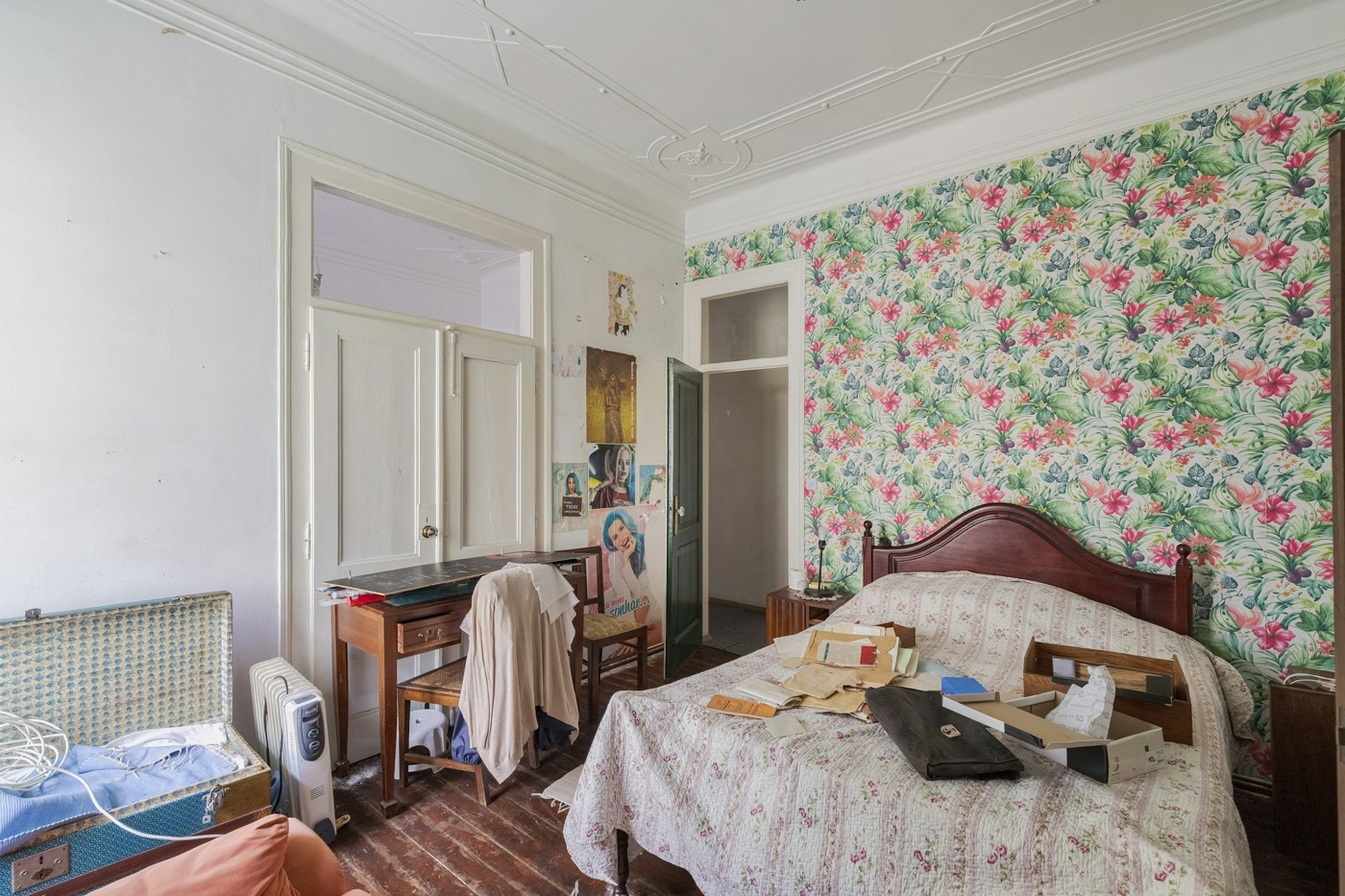
The door stays half shut so nobody sees in. The bed has a pile of clothes on one side and you sleep on the other. There is a cup on the windowsill that has been there long enough that you no longer see it. When a bedroom gets to this point, "clean your room" is not a task anymore. It is a wall. This article breaks it into stages you can stop after.
Why is cleaning a messy room so hard with ADHD?
Because a messy room asks you to make a hundred small decisions at once, and none of them is obviously first. Every object on the floor wants an answer: keep it, wash it, bin it, put it away, and where is away? An ADHD brain that struggles to plan and prioritise looks at all of it together and stalls.
I know that moment well. When I look at a messy room I get overwhelmed and do not know where to start. Without a list it looks like one big mountain I cannot get over. With one, it is a row of small things.
The bedroom has two extra problems. It is the room nobody else sees, so it drops to the bottom of the list. And it is where everything ends up at the end of the day, when you have the least left. That is why the bedroom so often goes first and furthest. If you recognise the stall itself more than the room, the article on why you cannot start cleaning with ADHD goes into it.
What does "livable" mean, and why aim for it?
Livable means the room does its jobs: you can sleep in the bed, walk across the floor, find clean clothes, and put a glass of water down. It does not mean dusted, hoovered or styled. Those come later, if they come at all this week.
Aiming for clean from a room that is unusable sets a finish line so far away that you never start. Aiming for livable gives you something you can reach today, and a livable room is far easier to clean than an unusable one.
How do you clean your room with ADHD, step by step?
Do the same stages in the same order, every time, so there is nothing to decide. Each stage has its own finish line, and after any of them you can stop and the room is still better than before. The order below borrows from counsellor KC Davis, who suggests tidying by type of thing (rubbish, dishes, laundry, things with a place, things without one) instead of by corner.
Stage 1: the bed
Take everything off the bed that is not bedding. Put it on the floor in one heap if you have to. Straighten the duvet and the pillows. That is the stage.
It goes first because it changes the most for the least effort. A clear bed means you sleep properly tonight, and it gives you a flat surface to sort on for the next stages. If this is all you manage today, the room already works better than it did this morning.
Stage 2: rubbish
Take one bin bag and go round the room picking up only rubbish: wrappers, receipts, empty bottles, tissues, packaging. Do not pick up anything else, even if it is in your hand already. One kind of decision, made over and over, is much easier than switching between ten kinds.
Tie the bag and take it out of the room straight away. A full bag left by the door has a way of staying there.
Stage 3: things that belong in another room
Take a basket or a box and fill it with everything that lives somewhere else: cups and plates, the scissors, a towel, a charger from the kitchen. Then carry the basket out and drop each thing in the right room. Do not stop to tidy those rooms on the way.
Stage 4: clothes
Clothes are usually the biggest part of a bedroom mess, so give them their own stage. Make two piles: dirty and clean. Dirty goes in the hamper or straight into the machine. Clean goes into one basket, unfolded. Folding is a separate job for another day, and skipping it now is fine.
If the clothes are the part that always beats you, it is worth reading why laundry defeats people with ADHD, because the pile on the floor is often a laundry problem rather than a bedroom one.
Stage 5: surfaces
Now the bedside table, the dresser, the desk and the chair that has become a wardrobe. What is left here is the hard part: small things with no obvious home, each needing a decision. Work through one surface at a time, and give the undecided things one box rather than forcing a decision on each.
That chair with a heap on it is a doom pile, and clearing a doom pile has a method of its own.
Stage 6: cleaning
Only now does cleaning start: change the sheets, dust the surfaces you just cleared, open the window, hoover the floor. This stage goes so much faster with the floor clear that it often feels like a reward rather than a chore.
How long should each stage take?
Ten to fifteen minutes on a timer, with permission to stop when it rings. I often set fifteen minutes for the kitchen, and when the timer goes off, I stop. A bedroom stage works the same way. The end matters more than the length, because a job with an end is one you are willing to start.
A room that has been sliding for months may need the same stage twice. That is fine. Stage 4 on Tuesday and Stage 4 again on Thursday is still moving forward.
How do you see that you are getting somewhere?
Take a photo before each stage. Halfway through a room an ADHD brain will often insist nothing has changed.
The trick that helps me most is recording a timelapse while I clean. Watching it back, I see my own progress instead of my brain telling me I did not do enough. In a bedroom, where the change from one stage to the next can be small, that proof counts.
How do you keep your room clean with ADHD?
Keep it at livable with a small daily minimum instead of waiting for the next big clean. Two or three minutes in the evening is enough: clear the bed, put the day's clothes in the hamper, carry out any cups. That is stages 1, 3 and 4 in miniature.
I notice it every time. When I manage a little tidying in the evening, I wake up in a much better state than when the house is a mess. A short fixed list for the end of the day has a name, closing duties, and the bedroom fits into it easily.
Make the easy option the right one. Put a hamper exactly where you get undressed, a small bin next to the bed, and a basket by the door for things that belong elsewhere. Things end up where it costs the least effort to drop them, so put the right place there.
What if the whole house is like this?
Then start with the bedroom anyway, and stop at Stage 1 if you need to. A bed you can sleep in makes every other day a little easier. For a whole house after a long slide, the article on starting to clean again after ADHD burnout covers working through the backlog across every room.
ADHD Cleaning Planner breaks each room into small tasks you can tick off, so a room has a clear ending, and its ten-minute timer suits stages like these. It also records timelapses and before and after photos while you clean, and its "Help, I can't start" countdown is there for the moment you are standing in the doorway.
Frequently asked questions
How do you clean your room with ADHD when you do not know where to start?
Start with the bed, every time, so the question is already answered. Clear it, straighten the duvet, and stop if that is all you can do. After that the order is fixed: rubbish, things that belong elsewhere, clothes, surfaces, and only then dusting and hoovering.
How long should each stage take?
Ten to fifteen minutes on a timer is enough for most stages. When the timer ends, you are allowed to stop. A badly overrun room may need the same stage twice, on two different days, and that still counts as progress.
How do you keep your room clean with ADHD once it is livable?
Give it a small daily minimum instead of a weekly big clean. A few minutes in the evening to clear the bed, put the day's clothes in the hamper and carry out any cups keeps the room at livable. Put a hamper and a bin exactly where things land.
Why is cleaning my room with ADHD so tiring?
Because a messy room asks for a hundred small decisions at once, and switching between kinds of decision is what wears an ADHD brain out. Working in stages by type of thing, only rubbish, then only clothes, means making one kind of decision over and over, which takes far less out of you.
How do you clean your room with ADHD and depression?
Shrink the job to the first stage and let that be the whole job. A bed you can get into is a real result on a day when your energy is very low. The stages exist so that stopping early still leaves the room better than it was, not as a failure.