
Short answer
With ADHD and children, aim for a house that works rather than one that stays clean. Decide the few things that must function each day, cut the number of objects that can spread, keep every job small enough to survive an interruption, and give children simple one-step jobs. A short evening reset matters more than a long weekend clean.
On this page
- Why is cleaning so much harder with ADHD and children?
- What should a clean house mean when you have kids?
- How do you stop the mess spreading faster than you clean?
- How do you clean when you keep getting interrupted?
- How can children help without it taking longer?
- What if your child has ADHD too?
- What is the one habit worth keeping?
- Where does the app fit in?
You clear the living room floor. Twenty minutes later it is covered in blocks again, and someone needs a snack, and the laundry you started this morning is still wet in the machine. With ADHD and children, a clean house can feel like something other people have.
I have ADHD and four children, so I know this one from the inside. They make a mess all day, and you are never done. So this article is not about a clean house. It is about a house that works.
Why is cleaning so much harder with ADHD and children?
Because children add mess faster than one adult can take it away, and they interrupt every job you start. Neither of those is a personal failing. They are the arithmetic of a family home.
ADHD makes both worse in specific ways. Starting a task is already hard. When I look at a messy house I get overwhelmed and do not know where to begin, and that is before anyone has asked me for anything. Starting it again after you were pulled away to find a shoe, settle an argument or answer "Mum, look" is harder, and with children that happens every few minutes. So jobs get abandoned halfway: half the dishwasher emptied, half the toys in the box, a basket of clean washing that never got folded.
There are also far more decisions. Every drawing from school, every outgrown jumper, every toy with a missing piece needs a small call about where it goes. Those undecided things pile up on the same surfaces, which is how doom piles form, and families make them faster than anyone.
And a house with kids never empties. There is no moment when everyone is out and you can finish. Any system that depends on finishing will fail.
What should a clean house mean when you have kids?
It should mean a house that functions, not a house that looks finished. Pick a short list of things that must work every day and treat everything else as optional.
For most families the list is something like:
- Clean dishes for the next meal
- Clean clothes for tomorrow
- A clear path across the floor, so nobody trips at night
- Beds that people can get into
If those four work, the house is working, even with crayons on the table and a fort in the living room. Writing the list down matters. What works for me is a list I can tick off: without one, a messy house looks like one big mountain, and with one it is a row of small things. Without it, your brain compares the house to a show home and finds it failing every hour of the day.
How do you stop the mess spreading faster than you clean?
Reduce how much can spread. You cannot outclean children, but you can lower the number of things that are out at once.
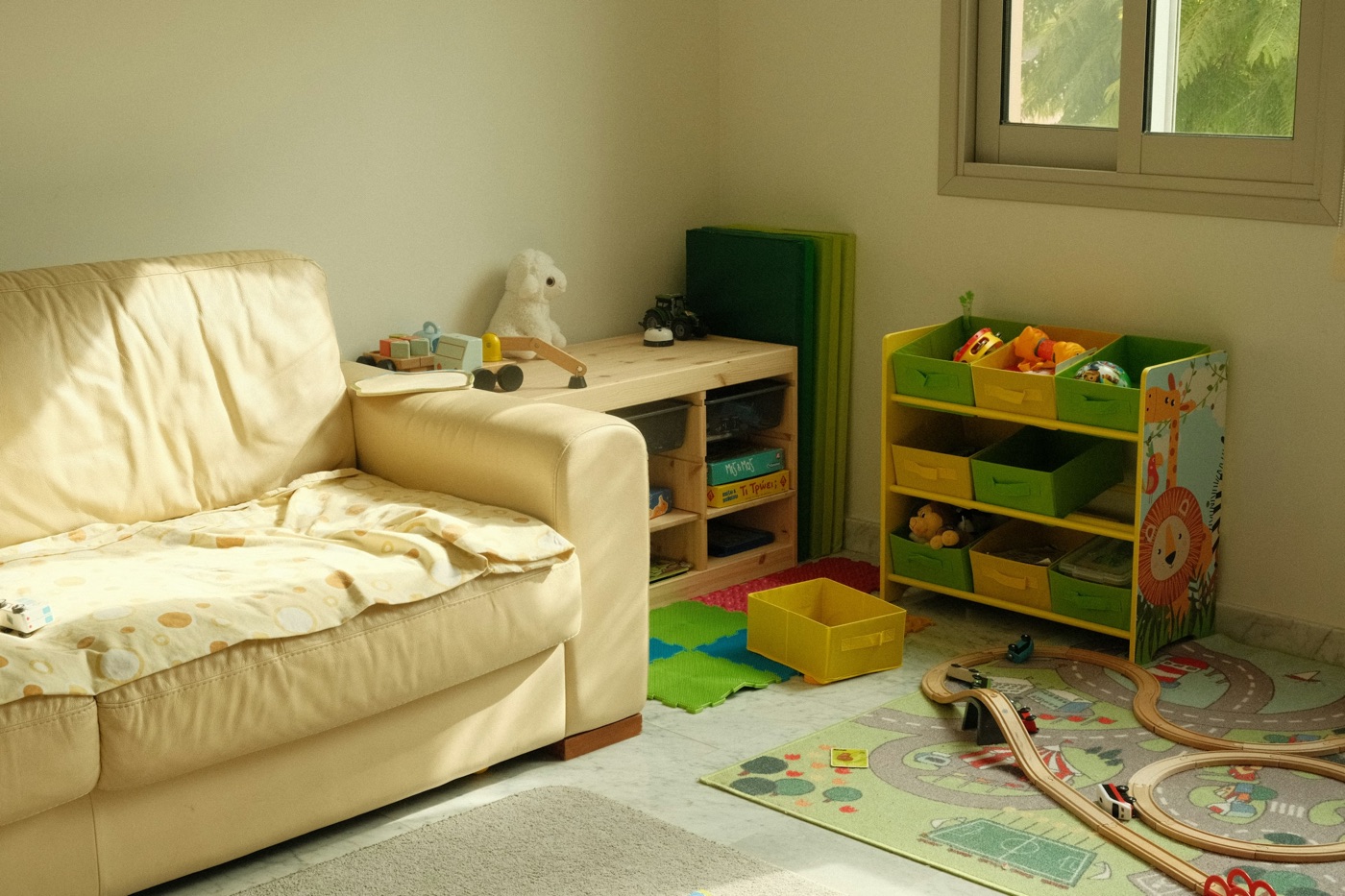
Rotate toys. Put half of them in a box in a cupboard and swap every few weeks. Fewer toys out means less to pick up, and the swapped-in box feels new.
Make storage one step. Open bins, no lids, no sorting by type. A child can throw a car into a bin. They will not open a lid, find the right compartment and close it again, and on a bad day neither will you.
Give each child one landing spot. A basket or hook by the door for bags, shoes and coats. Whatever comes in goes there, which keeps it off the kitchen table.
Have a paper tray. School letters, forms and drawings go in one tray. Once a week you go through it. Until then, it is contained.
How do you clean when you keep getting interrupted?
Make every job small enough to finish before the next interruption. One shelf, not the bookcase. One load in the machine, not "the laundry". The ten minutes you actually have, not the hour you were hoping for.
Laundry is the clearest example. It is already a chore with six separate steps that ADHD drops between, and children multiply the loads. Setting a phone alarm when the machine starts, so the wet washing does not sit until it smells, saves you rewashing more than any folding method.
When you are interrupted mid-job, leave a marker. Put the tea towel on the half-emptied dishwasher. Leave the laundry basket in the doorway. It is a reminder that there is something unfinished, placed where you will walk into it, because your memory will not hold it while you deal with a nosebleed.
And stop expecting to finish in one go. Three ten-minute bursts across a day count the same as one half-hour session. I often set fifteen minutes for the kitchen, and when the timer goes off, I stop. A job with an end is one I can start, even on a day full of interruptions.
How can children help without it taking longer?
Give them one instruction at a time, make the job a single step, and do it next to them. "Tidy your room" is a dozen tasks hidden in three words. "Put every sock in this basket" is one.
Some jobs that work by age:
- Toddlers: put toys in the open bin, put their own shoes on the rack.
- Primary school: clear their plate, put dirty clothes in the basket, match socks, wipe the table.
- Older children: one whole small job of their own, like emptying the dishwasher cutlery or taking the bins out.
A timer helps everyone. "Let's see how much we can put away before it beeps" has a clear ending, which is exactly what both an ADHD adult and a child need. Cleaning in the same room as them also works in your favour: having someone else present while you work is the idea behind body doubling, and a child counts.
Accept their standard. A bed made by a seven-year-old is lumpy. If you redo it in front of them, they learn that helping is pointless.
What if your child has ADHD too?
It is common. The NHS notes that ADHD often runs in families, so many parents recognise themselves only after a child is assessed. The same page recommends clear, simple instructions given one at a time and a to-do list kept somewhere easy to see.
That is good news for the house, because it means one system can serve both of you. A picture list on the bedroom door, short timed tasks, and an obvious ending work for your brain and theirs. Treat it as a shared problem you solve together, not a battle where you nag them about the same things you struggle with.
What is the one habit worth keeping?
A short evening reset, after the children are in bed or as part of their bedtime. Ten minutes: dishwasher on, toys in the bins, tomorrow's clothes out, the floor path clear. The morning then starts in a house that works, which is the hardest part of the day to clean in.
This is the same idea as closing duties: a fixed list, decided once, that ends when the list ends. On the worst night, do only the dishwasher and the floor. That still counts.
I notice the difference every time. When I manage a little tidying in the evening, I go to bed with a good feeling and wake up in a much better state than when the house is a mess.
Where does the app fit in?
The trick that helps me most is recording a timelapse while I clean. Watching it back, I see my own progress instead of my brain telling me I did not do enough. With children that counts double, because an hour later the room may look untouched while the video still shows the work. That idea is how ADHD Cleaning Planner started. It breaks each room into small steps, has a ten-minute timer that suits a day in short pieces, records timelapses and before and after photos, and has a "Help, I can't start" countdown for the room you picked.
Frequently asked questions
Why is cleaning so much harder with ADHD once you have kids?
Children add mess faster than one adult can remove it, and they interrupt constantly. ADHD makes it hard to pick a task back up after an interruption, so jobs are left half done. There are also far more small decisions about toys, clothes and paperwork, and every one of them costs attention.
What is the minimum a house with kids actually needs?
A short list of things that must work each day: clean dishes for the next meal, clean clothes for tomorrow, a clear path across the floor, and beds people can sleep in. If those four work, the house is functioning, even if it does not look tidy.
How do you get children to help clean when you have ADHD yourself?
Give one instruction at a time, make the job a single step, and do it alongside them. "Put every sock in this basket" works far better than "tidy your room". A timer turns it into a game with an ending, and storage without lids lets children finish the job on their own.
What if my child has ADHD too?
It is common, because ADHD often runs in families. The same tools work for both of you: short tasks, a visible list, one instruction at a time and an ending you can see. Treat it as a shared problem with a shared system rather than something you nag them about.