
Short answer
Body doubling means doing a task while another person is present, in the room, on a call or on a video. They do not help; their presence gives your brain the outside structure ADHD makes hard to produce. You can do a version alone by recording yourself, cleaning alongside a livestream, or saying your plan out loud.
On this page
You have probably noticed it without having a name for it. The kitchen that sat untouched for a week gets cleaned in forty minutes because a friend was sitting at the table drinking tea. They did not lift a finger. You still got it done. That effect has a name, body doubling, and once you know how it works you can use it on purpose, including on the days nobody else is around.
What is body doubling?
Body doubling means doing a task while another person is present. That is the whole definition. The other person, the body double, does not have to help, advise or even pay attention to you. They can be on the sofa with a book, on a video call with their camera on, or working at the other end of the table.
The term comes from ADHD coaching rather than from a lab, and the research on it is still thin. But it is one of the most widely shared tricks among adults with ADHD, because so many people recognise the experience: tasks that would not start alone start easily with someone else in the room.
Why does it work with ADHD?
It works because it supplies from outside the structure an ADHD brain struggles to produce on its own. Most cleaning advice assumes you can generate the push to start, the focus to continue and the sense of when you are done. ADHD makes all three unreliable. Another person in the room quietly covers some of each.
A start time appears. When someone arrives at two o'clock, two o'clock becomes the moment you begin. Without them, "later" has no edge, and later turns into tomorrow. If getting going at all is the problem, there is more on why you cannot start cleaning with ADHD.
Drifting gets noticed. Alone, you pick up a mug, carry it towards the kitchen and end up twenty minutes into your phone on the stairs. With someone present, the drift is visible, if only to yourself. You come back sooner.
The task feels less lonely. Cleaning is dull and silent, and a bored ADHD brain goes looking for something more interesting. A person in the room is just enough stimulation to keep the boredom from winning.
There is an end. The visit or the call finishes at some point. A job with a known finish is far easier to begin than one that could swallow the whole afternoon.
How do you set up a body doubling session?
Make the request small and specific, then keep the session short. A vague "would you keep me company sometime?" rarely turns into anything. "Can you sit in the kitchen with me on Saturday at ten for twenty minutes while I do the counters?" usually does.
- Pick one room or one job. The counters, the bathroom sink, the pile on the bedroom chair. Not "the flat".
- Agree a length. Twenty to thirty minutes is plenty. The end time matters as much as the start time.
- Say what you want from them. Usually that is nothing at all. Tell them they can scroll, read or do their own work. That makes yes easy.
- Tell them your one task at the start. Saying it out loud turns a vague intention into a small promise.
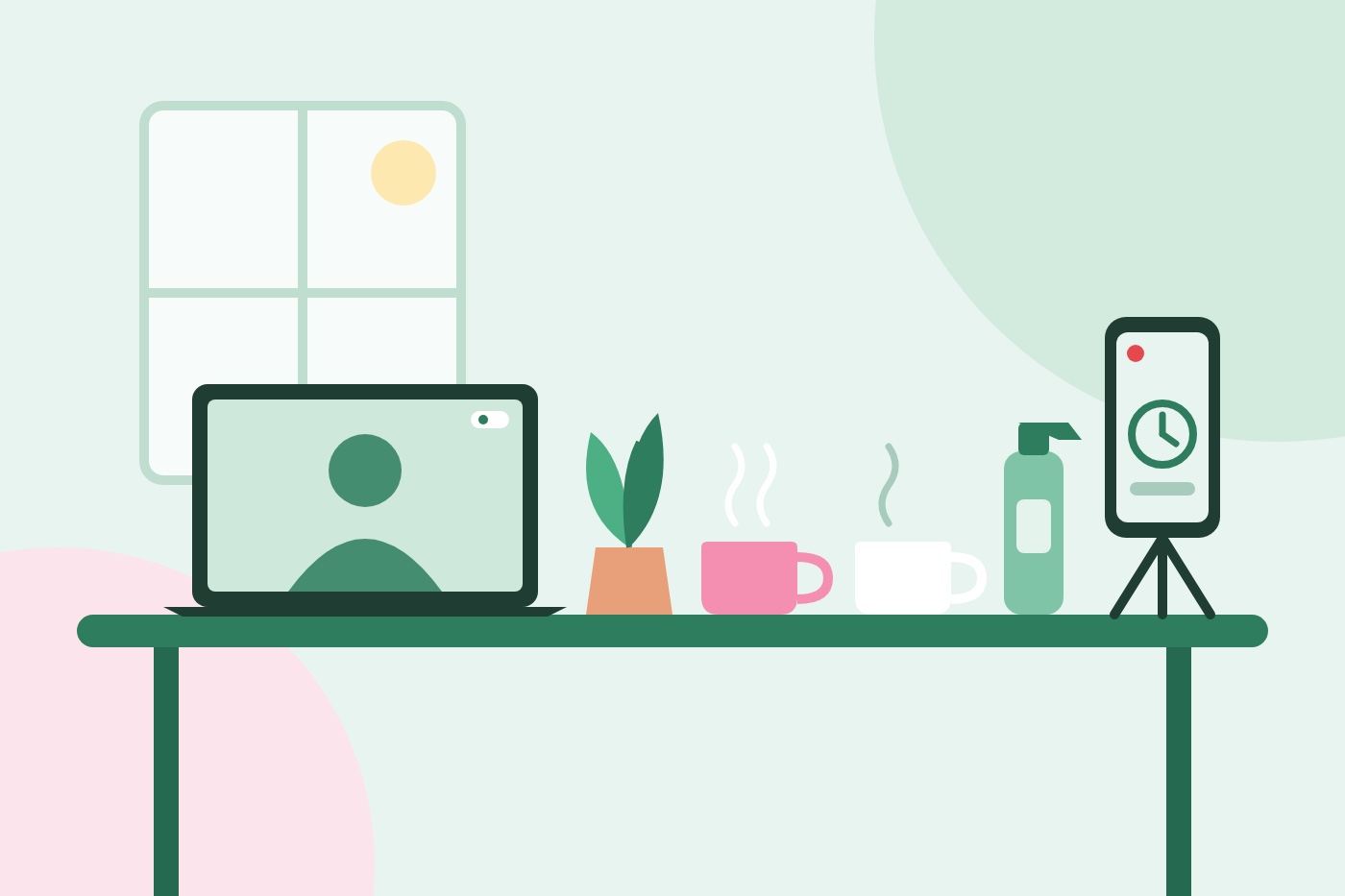
A video call works almost as well as a person in the room. Prop the phone somewhere it can see roughly where you are working, keep the sound on, and get going. Two people with ADHD can do this for each other, each doing their own chores at the same time, which removes any feeling of asking for a favour.
Can you body double alone?
Yes, a version of it. You cannot conjure a person, but you can recreate the parts that do the work: a witness, a start time and an end point. These are the approaches people use most.
Record yourself
Set your phone on a shelf and start a timelapse before you touch anything. The camera stands in for the watcher. You know it is running, so drifting off feels more obvious, and afterwards you have a short video of the room changing. That video is useful in its own right, because people with ADHD so often finish an hour of cleaning convinced they barely did anything.
Clean along with someone else
Clean-with-me videos and live cleaning streams are the closest thing to a body double on demand. Pick one where the person is actually cleaning, and start your own task at the moment they start theirs. A live stream has the edge, because someone really is working at the same time as you, but a recorded video still gives you a pace to match and an end point: when the video ends, so can you.
Narrate it
Say out loud what you are about to do, as if someone were listening: "I am doing the bathroom sink and the mirror, and I stop at half past." It sounds odd and it helps. Speaking the plan turns it into a decision rather than a thought, and the stop time gives the session an edge.
Borrow the end from a timer
Part of what a body double gives you is that the session finishes. A timer does the same job alone. Set it for ten or fifteen minutes and agree with yourself that stopping when it rings counts as done. A fixed slot each day helps too, which is the idea behind a cleaning routine that survives a bad week.
What if body doubling does not work for you?
Then it is not the right tool for you, and that is fine. Some people find another person's presence distracting or stressful, especially in a room they are embarrassed about. Others find it works for a few weeks and then stops feeling different. Both are common.
If having someone see the mess is the obstacle, start with a solo version first: a timelapse no one else will ever watch, or a video call with the camera pointed at the ceiling. If it stopped working, change one thing about it, such as the person, the time of day or the room. And if what is blocking you is one stubborn heap rather than starting in general, clearing a doom pile needs a method of its own more than it needs company.
How the app fits
ADHD Cleaning Planner has timelapse recording built in, so you can start the camera and the cleaning at once, along with before and after photos. Rooms come broken into small tasks, the ten-minute timer gives every session an end, and recordings stay on your device. It is free to start, with an optional premium subscription.
This article describes coping strategies, not medical advice. If ADHD is affecting your daily life, a clinician is the right person to talk to.
Frequently asked questions
Does the body double have to help with the cleaning?
No. A body double only needs to be there. They can read, work on a laptop or do their own chores. What helps is that someone is present while you work, not that the work is shared, so asking for it costs the other person very little.
Can a video or livestream count as a body double?
For many people it can. A clean-with-me video or a live stream gives you someone working at the same time, and that is often enough to get started and keep going. It works best when the video shows someone actually cleaning, rather than talking about cleaning.
How do I body double when I live alone?
Recreate the parts that do the work. Record yourself with a timelapse so the camera stands in for the watcher, say out loud what you are about to do and when you will stop, or put on a clean-with-me video. Each one gives you a witness, a start time or an end point.
What should I say when asking someone to body double?
Keep it small and specific: a time, a length and what you want from them. For example, ask whether they will sit in the kitchen with you for twenty minutes on Saturday morning while you do the counters. A short, clear request with an end time is much easier to say yes to.