
Short answer
Waiting for motivation to clean usually means waiting for a feeling that does not arrive on demand. Maya, who has ADHD, starts with a very small step and a timer of five to fifteen minutes, and carries on only if she feels like it. It does not always work, but it often gets her started. ADHD Cleaning Planner is built around that.
On this page
- Why is there no motivation to clean with ADHD?
- Does motivation come before you start, or after?
- Why doesn't "just start" work?
- What is a first step you can do with zero motivation?
- What do you do on a day when even that is too much?
- How do you stop feeling that you have failed?
- Why is it worth doing at all?
- Where does the app fit?
You know the house needs doing. You may even want it done. And still you sit there waiting to feel like it, and the feeling does not come. This article is about why that happens with ADHD, and about what to do on the days you feel nothing.
Why is there no motivation to clean with ADHD?
Often because starting is the hard part, and cleaning gives you nothing to hold on to when you begin. CHADD, the US ADHD organisation, describes executive function as the brain functions that activate, organise and manage other functions, and links ADHD closely to difficulties with them. Getting from "I should" to "I am doing it" is exactly that kind of job. That is the same thing described in why you cannot start cleaning at all.
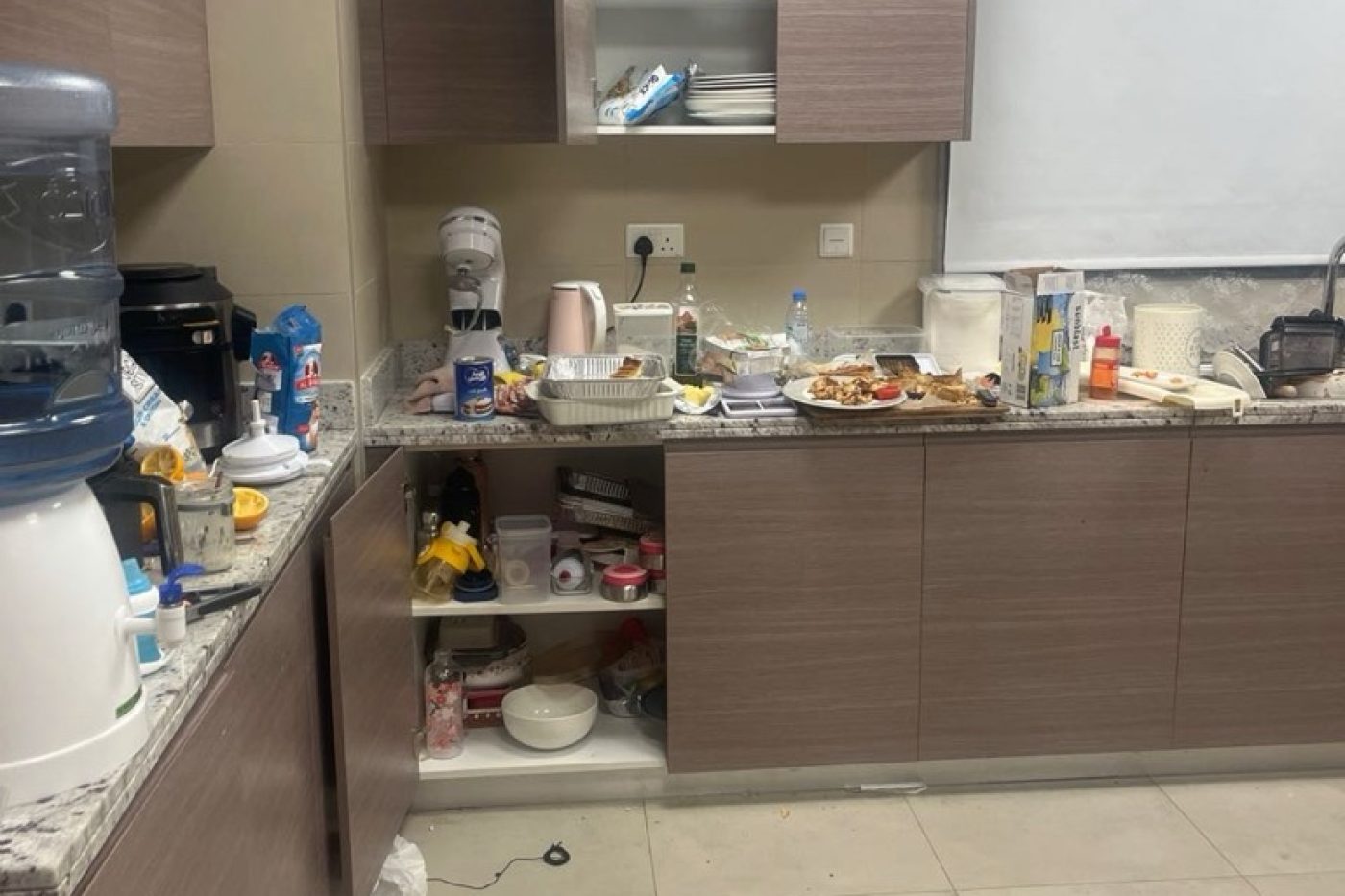
I know the stuck feeling from the inside. When several rooms are messy I do not know where to start. Every room has a good reason to come first, so I go round in circles. Or one room is so messy that it looks like a pile far too big to begin, and I end up scrolling on my phone at the dining table.
So people wait for the mood. And waiting is the trap, because the mood is exactly what the task is not producing.
Does motivation come before you start, or after?
For me it often comes after, and I cannot promise that for everyone. Most advice tells you to get motivated and then begin. What helps me is the other order: I set a timer for 5, 10 or 15 minutes, do as much as I can, and then pause, or carry on if I feel like it.
It does not always work, but it helps me begin very often. Time is tricky for me too. I get easily distracted, which makes a job take longer, yet I often think the kitchen will take hours and it goes faster than I expected once I keep going.
That changes the question. Not "how do I feel like cleaning?" but "what is the smallest thing I could do that needs no feeling at all?"
Why doesn't "just start" work?
Because it names no step, and it can make you feel that nobody understands. When I hear "just start" I do not feel helped, I feel misunderstood.
What I need is something that tells me what to do. But a fixed schedule I MUST follow works against me, too. Some days I get a burst of energy and a taste for it, some days I have none, and the idea of having to clean pushes me away. So a short list of small steps to choose from suits me better than a plan for the whole week.
What is a first step you can do with zero motivation?
A physical action so small that it hardly counts as cleaning: one bag, one surface, one load. Not "tidy the living room", which is forty tasks, but "pick up everything that is rubbish and put it in a bag".
- Carry every mug in the room to the kitchen. Only the mugs.
- Put all the rubbish you can see in one bag.
- Take the clothes off the floor and put them in the basket, unsorted.
- Clear the one surface you look at most.
Breaking a messy space, the kitchen for example, into very small steps and doing them one by one makes it feel less like a mountain. A list I can tick off helps, because without one a messy house looks like a single pile.
Then the timer does a quiet job: it turns an unbounded task into a bounded one, and you are allowed to stop when it rings. That permission is what makes starting possible, because you are only agreeing to ten minutes.
What do you do on a day when even that is too much?
You do very little, and you ask for help. On a bad day I do only what has to be done, and I ask the family to help. Sometimes I still get stuck scrolling, and that happens too.
If the step is still too big, shrink it again: stand up, walk into the room, pick up one thing. If weeks go by like this, or you feel low most days, this is more than a cleaning problem. Starting to clean again after ADHD burnout is a slower, gentler route, and a doctor or ADHD professional is the right person to talk to. A method cannot replace that.
How do you stop feeling that you have failed?
You start by knowing it is not your fault, and you look at what you did instead of how you feel. When the house is a mess I feel I have failed. I have the idea that it is never good unless everything is spotless, and it never is.
The trick that helps me most is recording a timelapse while I clean. Watching it back, I see my own progress instead of my brain telling me I did not do enough. Seeing the mess disappear at speed is fun and satisfying, and it makes me want to clean in one go next time. A before photo and an after photo do something similar, and cleaning timelapses and before and after photos are worth a try even if they sound silly.
Why is it worth doing at all?
Because of what a tidier house does for the day. When the house is tidy my mood is much better. My head is emptier, I have room for other things, and I am more positive and cheerful.
It is the evening that matters most to me. When I tidy a little before bed, even when I am tired and it is late, if I can bring myself to do it, I wake up much better. The short end-of-day version has a name, closing duties.
Where does the app fit?
ADHD Cleaning Planner is built around starting without motivation. Every room is already broken into small tasks you can tick off, a timer you start in one tap keeps a session short enough to begin, and a "Help, I can't start" button starts a personalised countdown for the room you choose. You can also tell it how much energy you have, Low, Some or Full, so a low day gets a smaller plan instead of a guilty one.
Frequently asked questions
Can ADHD cause no motivation to clean?
It can look that way. ADHD makes starting a task harder, and that can feel exactly like having no motivation, even when you want a tidy home. Maya, who has ADHD, says the wish is there but she gets overwhelmed and does not know where to begin, which is why a tiny first step works better than waiting to feel ready.
How do I clean my room with no motivation?
Pick one small step, such as putting the rubbish in a bag, and set a timer for five, ten or fifteen minutes. Do as much as you can, then pause, or carry on if you feel like it. Maya says this does not always work, but it helps her begin very often.
How do I clean the house when I feel nothing at all?
Do very little, only what is needed, and ask the people you live with to help. Maya does the same on a bad day. If weeks go by like this, or you feel low most days, that is more than a cleaning problem, and a doctor or ADHD professional is the right person to talk to.
Does a fixed cleaning schedule help with motivation?
It can go either way. Maya says she needs something that tells her what to do, but a schedule she MUST follow works against her, because some days she has a burst of energy and some days none. A short list of small steps to choose from is gentler than a fixed plan.